
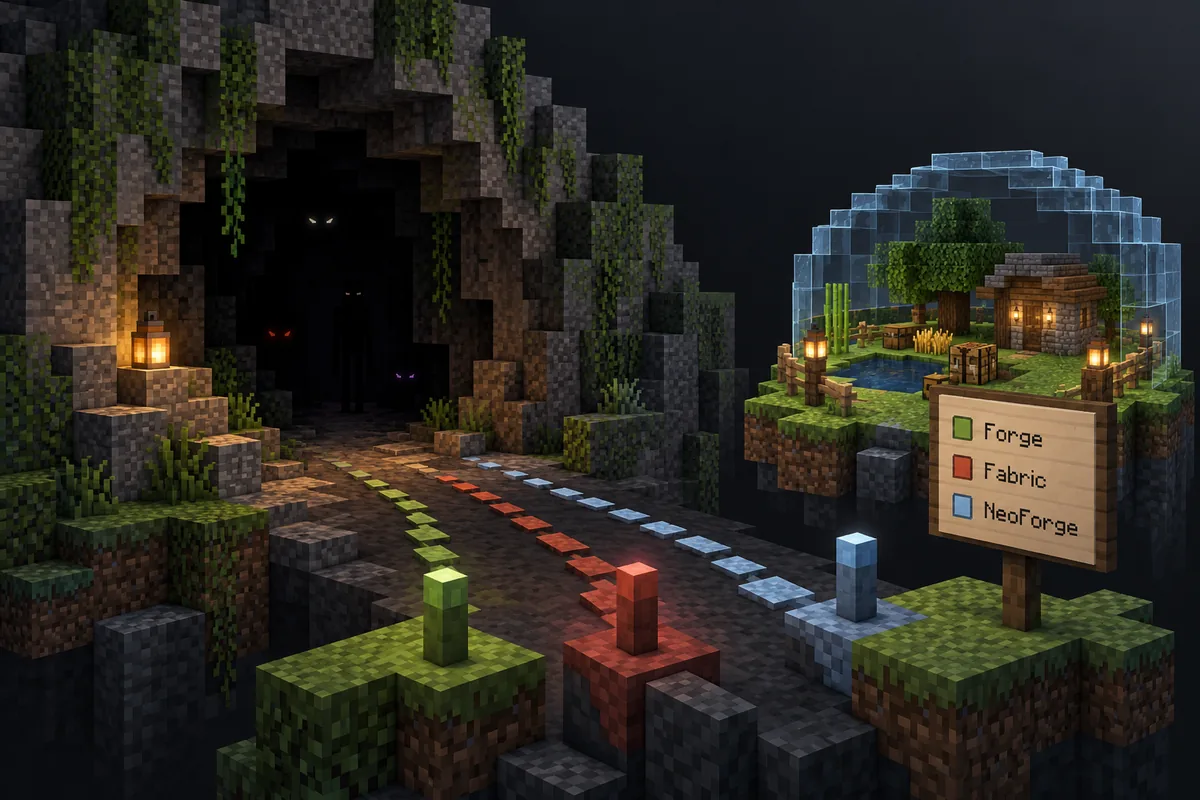
Quick answer: what belongs on a 1.21.1 shortlist?
The useful Minecraft horror mods 1.21.1 shortlist contains projects whose file page names Minecraft 1.21.1 and your chosen loader. Popularity does not replace an exact artifact, dependency list, or supported-side note.
Choose the fear loop first, then record the file URL, create a clean 1.21.1 instance, add only named dependencies, and launch a new world. Missing setup details mean the project is a lead, not a confirmed recommendation.
| Shortlist fit | What must match | Decision |
|---|---|---|
| A Forge horror mod | Forge 1.21.1 file, dependencies, and role | Use only when the project page names the exact Forge branch. |
| A Fabric horror mod | Fabric 1.21.1 file plus Fabric API or libraries | Keep it in a separate Fabric profile; do not rename a Forge JAR. |
| A NeoForge horror mod | NeoForge 1.21.1 artifact and matching libraries | Choose the NeoForge file explicitly; Forge compatibility is not implied. |
Compare horror styles before comparing project names
Separate creature encounters, atmosphere, cave threats, and progression systems before comparing project names. A visual effect is easy to remove; world generation or infection can affect a long-running save.
Use the project file row on CurseForge, Modrinth, or a developer page as compatibility evidence. Record whether each choice fits a short scare session, cave exploration, solo survival, or a shared server.
| Horror style | Best fit | Main check before install |
|---|---|---|
| Creature encounter | Short sessions and focused tension | Spawn conditions, AI cost, and client/server role |
| Cave or darkness threat | Players who want exploration pressure | World generation, lighting, sound, and performance |
| Atmosphere and events | A vanilla world with occasional unease | Resource packs, audio settings, and optional client files |
Five compatibility checks for Minecraft 1.21.1
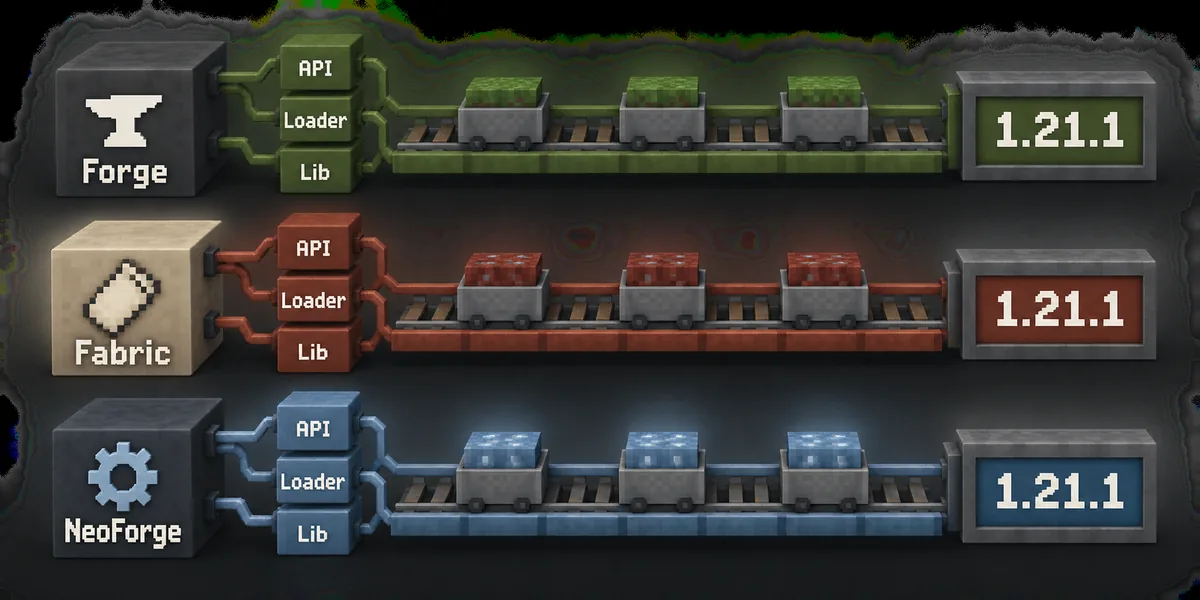
Read the selected file for the exact game version, loader, file type, date, dependencies, and supported side. A 1.21.x filter does not prove that the artifact targets 1.21.1.
Forge, Fabric, and NeoForge use different APIs and artifacts. Java JAR files are not Bedrock packages, and a client-only visual mod cannot satisfy a dedicated server dependency; missing fields make the project unconfirmed.
| Check | What to verify | Why it matters |
|---|---|---|
| Game version | The file explicitly lists 1.21.1 | Prevents silent mismatches with 1.21, 1.21.2, or another branch. |
| Loader | Forge, Fabric, or NeoForge is named on that file | Loader APIs and metadata are not interchangeable. |
| Dependencies | Required API, library, and compatible versions | Missing libraries can crash startup or remove core features. |
| Server role | Client-only, server-only, or both | Every player and the server need the correct shared manifest. |
Forge, Fabric, and NeoForge are separate 1.21.1 paths
Forge, Fabric, and NeoForge need their own loader line, artifacts, and libraries. Moving a Forge JAR into a Fabric or NeoForge folder cannot make it compatible.
Keep one loader family per instance. For friends, publish a manifest with Minecraft 1.21.1, loader build, mod and dependency versions, server files, client files, and configuration changes.
- Create a separate profile for each loader family
- Keep Forge, Fabric, and NeoForge dependencies in their own manifests
- Record the exact 1.21.1 artifact before installing
- Compare the client and server file lists before inviting friends
Safe installation workflow for a 1.21.1 horror profile
Keep the project URL, file version, dependencies, and changelog beside the profile. Prefer a traceable JAR page over countdown mirrors, EXE installers, APK files, or guessed CDN paths.
Start with the loader, required libraries, and one major horror project in a new world. Inspect the log before adding ambience, optimization, voice, shaders, or cosmetic companions.
- 1
Lock Minecraft 1.21.1
Create a profile that cannot silently switch to another game release.
- 2
Choose one loader
Use Forge, Fabric, or NeoForge according to the exact project artifact.
- 3
Verify the file page
Match publisher, file date, dependencies, loader, and client/server role.
- 4
Test one major mod
Use a new world and check startup, generation, audio, entities, memory, and logs.
Performance and multiplayer checks
Entity scans, pathfinding, rendering, sound, particles, and world events can create tick lag. Test with a sensible render distance, watch memory and the log, and remove one change at a time.
For multiplayer, separate client-only ambience from server gameplay files and keep one written 1.21.1 manifest. Treat updates as a fresh test before moving an important save.
| Check | Single-player test | Multiplayer implication |
|---|---|---|
| Loader and version | Confirm the local instance boots and lists the mod | Server and clients need the same documented 1.21.1 stack |
| Dependencies | Read missing-library errors in the newest log | Publish one shared dependency manifest |
| World changes | Use a new save and observe generation and entities | Back up the server world before changing branches |
When a 1.21.1 project has no confirmed file
If the official page has no exact file, dependency notes, or only an old source archive, mark the project unconfirmed. Do not fill the gap with a renamed JAR, guessed mirror, or hidden publisher.
Reopen the file page when Minecraft, the loader, or the project changes. Use the 1.20.1, Fabric, Forge, or Bedrock guides when their version or platform is the real target.
- Use the official project page as the source of supported versions
- Prefer a file page with an exact 1.21.1 artifact and release notes
- Treat an old or source-only project as a research lead
- Do not promise a direct download when the destination cannot be verified
Final decision: choose the compatible fear loop
Choose a Minecraft horror mod 1.21.1 only when the project page, release, loader, dependencies, and profile role agree. Start with a small creature or atmosphere project before infection, generation, or a full modpack.
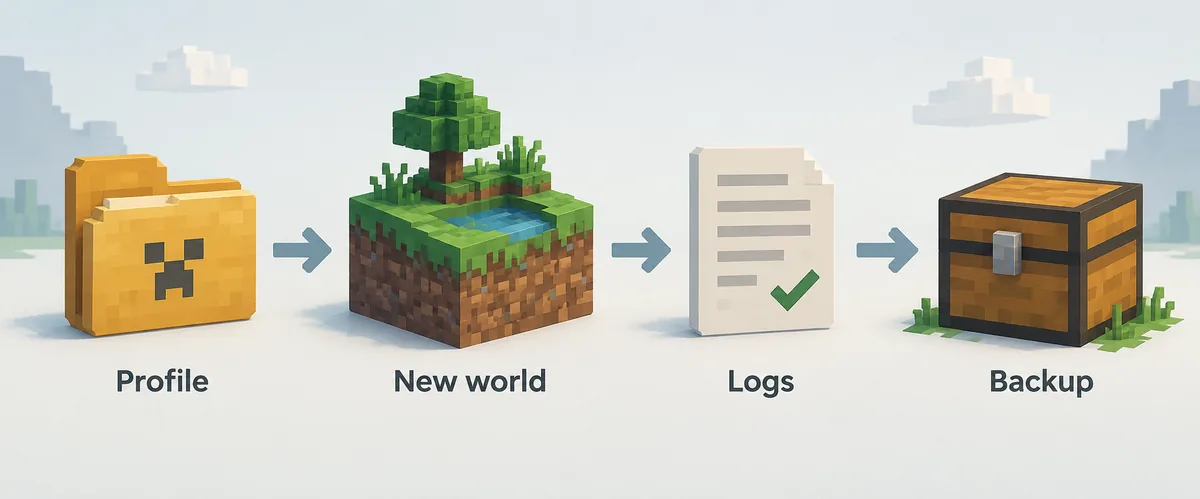
The practical answer is a process: exact file, exact loader, clean profile, new world, visible log, and a backup. Use the style, loader, multiplayer, or Bedrock guides when your intent is narrower.
Minecraft horror mods 1.21.1 FAQ
What are the best Minecraft horror mods 1.21.1?
There is no universal winner. Choose by horror style, then confirm that the current project page has an exact Minecraft 1.21.1 file for Forge, Fabric, or NeoForge. A verified artifact and dependency list matter more than a ranking video.
Can Minecraft horror mods 1.21.1 run on Fabric?
Only when the specific project publishes a Fabric 1.21.1 artifact and lists its Fabric API or library requirements. A Forge JAR cannot be made Fabric-compatible by renaming it or moving it to another folder.
Is NeoForge the same as Forge for 1.21.1 horror mods?
No. They are related loader ecosystems but use separate artifacts and compatibility metadata. If a project lists NeoForge 1.21.1, use that NeoForge file unless the publisher also documents a separate Forge build.
Can I use a 1.21 or 1.21.2 mod on Minecraft 1.21.1?
Do not assume nearby releases are interchangeable. Keep the file out of the profile unless the publisher explicitly documents 1.21.1 support or a tested compatibility range.
Do Minecraft horror mods 1.21.1 work in multiplayer?
Many can, but the server and clients must share the exact game version, loader build, mod files, dependencies, and configuration. Test a private server and keep a written manifest before using an important world.
Version and loader sources
- Fabric installation guideOfficial Fabric Loader installation path and launcher guidance.
- Minecraft Java Edition downloadsOfficial Minecraft launcher and Java Edition download boundary.
- Minecraft Forge downloadsOfficial Forge distribution and version selection.
- NeoForge downloadsNeoForge project home and loader release information.
- Modrinth projectsProject pages expose loader, game-version, dependency, and file metadata; select the exact 1.21.1 artifact.